The "clean girl" aesthetic has swept across social media, championing a polished and minimalist style that appears both elegant and effortless. Defined by dewy skin, slicked-back hair, and a wardrobe of neutral tones, the trend is presented as an aspirational lifestyle choice. Yet, beneath its pristine surface lies a complex and contentious debate. A growing chorus of cultural critics argues that this supposedly modern look is largely a rebranding of styles with deep, long-standing roots in Black and Latine communities. These critiques challenge not only the trend's originality but also the exclusionary implications of its name and the demanding standards it promotes.
Defining the 'Clean Girl' Aesthetic: Visuals and Lifestyle
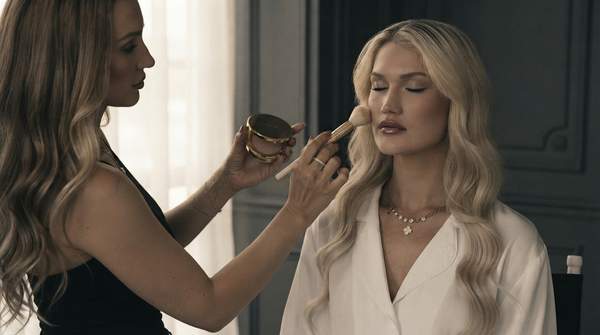
The "clean girl" aesthetic is more than a fleeting fashion choice; it's a meticulously curated form of self-presentation that encompasses appearance, habits, and environment. Visually, the look is characterized by what is often described as a "no-makeup" style, featuring dewy or "glass-like" skin, perfectly manicured nails, and heavily glossed lips. The associated uniform consists of monochromatic or neutral-colored clothing, creating a sleek, simple, and polished silhouette that suggests an understated elegance.
This aesthetic extends far beyond personal grooming. Social media portrayals construct an entire world around the "clean girl." According to an analysis from a student publication at Duke Kunshan University, her apartment is often depicted as being flooded with sunlight, her bed dressed in neutral-toned linen sheets. Her daily routine is one of discipline, involving journaling, consuming pre-planned salads, and sipping matcha lattes from reusable tumblers. This curated lifestyle is designed to project an image of effortless perfection and discipline.
On platforms like TikTok, the trend functions as an aspirational identity. Research from Elon University highlights how influencers popularizing the aesthetic can set unattainable standards, encouraging followers to compare themselves to a polished ideal. The paradox of the "clean girl" is that its "effortless" appearance often requires significant time, labor, and financial investment to achieve, a reality that is frequently obscured in its online presentation.
Cultural Threads: 'Clean Girl' Elements and Their Origins
A primary critique of the "clean girl" aesthetic is that it popularizes styles long practiced by women of color, often without acknowledging their origins. Critics point out that many of these visual trademarks were previously ignored or even stigmatized when worn by Black and Brown women, only to be celebrated as a new trend when adopted by a different demographic. According to reporting by writer Shanalie Wijesinghe, turning cultural appropriation into appreciation requires giving credit where it is due. The following table breaks down key elements of the trend and traces their documented cultural history.
| 'Clean Girl' Element | Documented Cultural Origin |
|---|---|
| Slicked-back hair (e.g., low bun) | Slicked-back low buns have been a common style among Black and Brown women for decades. Many women from these communities were sometimes shamed for these very looks, which are now being celebrated under a new name. |
| Gold Hoop Earrings | Large gold hoop earrings were a signature trend that originated with Black and Brown girls in the 1990s, with roots in the disco and hip-hop scenes of earlier decades. |
| Minimal 'No-Makeup' Look & Dewy Skin | The "no-makeup" look, heavily glossed lips, and dewy skin achieved with products like cocoa butter are identified as African American-inspired styles. These practices have cultural significance that is often overlooked when adopted by the trend. |
According to an article by Yamilhee Saint-Val for a Northeastern University journalism publication, the combination of large gold hoops, glossed lips, and hair smoothed down with gel was born in the 1990s from Black and Brown communities. For those who have practiced these styles for decades, their repackaging under a new name can feel like a "slap to the face." The Latina community has been particularly vocal in speaking out against what they see as the hypocritical sentiments of the trend.
As TV personality Joseline Hernandez noted on The View, much of today's fashion stems from "street style," which she says comes from girls "from the streets" who cannot afford expensive apparel. This reframes the aesthetic not just as a matter of race but also of class, where styles developed out of necessity or cultural expression are rebranded for a wealthier audience.
Beyond Appropriation: Critiques of Exclusivity and 'Performative Femininity'
The criticism of the "clean girl" aesthetic extends beyond cultural appropriation to its very name and the restrictive standards it sets. The word "clean" itself carries exclusionary weight. As one analysis points out, if a minimalist makeup look is deemed "clean," it implicitly suggests that wearing more makeup or having skin with acne, texture, or hyperpigmentation is "dirty." This language reinforces a narrow standard of beauty that, as multiple critics have noted, tends to center thin, young, wealthy, and white women, leaving many people outside the trend's strict definition of attractiveness.
Furthermore, the "effortless" image promoted by the aesthetic conceals the significant labor and expense it often demands. This obsession with appearing "naturally beautiful" creates what one Duke Kunshan University publication calls a "double standard that demands women meet impossible expectations while denying the legitimacy of exhausting labor that goes into being socially acceptable." This pressure to achieve a specific look is a form of "performative femininity," where beauty becomes less about personal expression and more about adhering to a socially rewarded script.
This pressure to conform can also stifle creativity. As an article from Syracuse University's The Peel argues, such trends can discourage originality by pushing a "singular, basic style that girls feel pressured to obtain." When fashion becomes a rigid set of rules for being considered attractive, it loses its function as a vehicle for personality and self-expression. The "clean girl" aesthetic, in this view, becomes a tool that reinforces conformity rather than celebrating individuality.
Navigating the 'Clean Girl' Aesthetic: A Call for Cultural Awareness
To engage with the "clean girl" aesthetic meaningfully requires looking beyond its polished and minimalist surface. Readers should approach the 'clean girl' aesthetic with an understanding of its complex cultural origins and the critiques surrounding its exclusionary nature and promotion of aspirational, often costly, beauty standards. The trend is not merely a collection of style choices but a cultural phenomenon that intersects with issues of race, class, and gendered expectations of beauty and labor.
A positive outcome from these critical conversations would be an increased awareness and discussion on social media platforms regarding the cultural roots of beauty trends and the implications of 'effortless' aesthetics. By acknowledging the history behind styles like slicked-back hair and gold hoop earrings, and by questioning the hidden work behind "natural" beauty, both consumers and creators can foster a more inclusive and historically conscious approach to fashion and style.
Sources
- Clean Girl Aesthetic: The Black & Brown Women Who Did It First — Boulevard
- Momentum
- Performative Femininity: the Dirt Behind the “Clean Girl Aesthetic” – The Lilypad — SITES
- Spring 2026: Avery Ferguson — Elon University
- "Clean Girl" — Journalismdesign