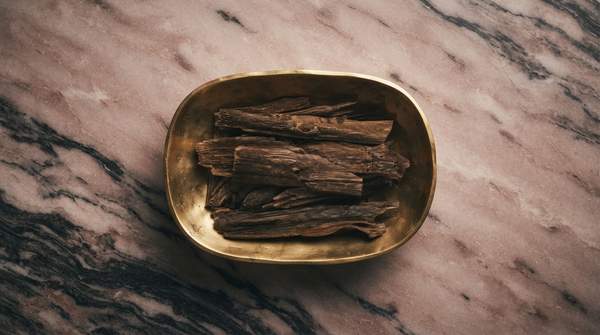
Few fragrance materials carry a story as long as oud's. A rare, resinous heartwood from Aquilaria trees, it has traveled from the incense burners of ancient Asia and the Middle East to the collections of nearly every major luxury house. What explains the journey is a combination of scarcity, spirituality, and a scent profile like almost nothing else in the perfumer's palette: deep, earthy, animalic, leathery, and unmistakably long-lasting.
The Enduring Allure of Oud: From Ancient Ritual to Modern Luxury
Oud, also known as agarwood, is one of the most treasured and talked-about scents in the world, prized for its rare origin, strong character, and spiritual value. Writing for Ibrahim Al-Qurashi, Ali Nidal describes it as a fragrance of "mystery and beauty," treasured for centuries across the Middle East and Asia before finding a global audience drawn to "its deep, rich aroma that tells a story of tradition, elegance, and individuality."
While the wider world is still getting to know oud as an olfactory ingredient, the Middle East's relationship with it runs deep. There, it has long served as an aromatic cultural bridge, with traditions stretching from Saudi Arabia and the UAE to Türkiye, India, Indonesia, and Vietnam. As AramcoWorld's coverage observes, its earthy, animalic, and leathery aroma is what makes it such a coveted ingredient in luxury perfumery.
Ancient Roots: Oud's Cultural and Spiritual Significance
The journey of oud stretches back thousands of years—some estimates place its earliest use around 1400 BCE, when it was first burned as incense. Over centuries it took on roles far beyond fragrance: Traditional Middle Eastern culture used it for centuries in spiritual practices and medicinal applications, and it carried a reputation signifying prosperity and high-status living, as Ajmal's cultural explainer recounts. Its longstanding regional relationship cemented oud as a prestigious substance, valued in perfumery and everyday use alike.
That layered history is precisely what gives oud its worth beyond the perfume counter. It is not merely a scent but a marker of hospitality, ritual, and standing—an "experience" rather than a fragrance, as Ali Nidal puts it. This cultural depth is the foundation on which its modern luxury status was built.