Circular beauty is the application of circular-economy principles—eliminate waste and pollution, circulate products and materials at their highest value, and regenerate nature—to skincare, haircare and body care. The Ellen MacArthur Foundation, whose framework underpins the concept, describes a circular economy as a system where materials never become waste and nature is regenerated, with products kept in circulation through maintenance, reuse, refurbishment, remanufacture, recycling and composting. For beauty shoppers, the practical payoff is this: circularity is one of the few sustainability terms with a working definition, which means you can check a brand's claims against observable practices rather than vague eco-marketing.
What is Circular Beauty?
The cosmetics industry operates largely on a linear model: take materials from the earth, make products, and discard the packaging. The scale of the discard problem is substantial—the industry produces more than 120 billion units of packaging globally every year, according to Aquafil's ECONYL magazine, a regenerated-nylon producer covering circular brands. Circular beauty rejects that take-make-waste sequence at the design stage.
In the beauty context, circularity has a concrete, checkable meaning. UpCircle Beauty, a brand that positions itself around circular design, defines it as utilizing ingredients derived as by-products from other industries and employing packaging designed to re-enter the recycling stream. This approach aims to eliminate single-use waste from both product formulations and their containers. That definition matters because it distinguishes circularity from adjacent buzzwords. The brand is blunt on this point: circular beauty is not the same as clean, natural, sustainable or eco-friendly, terms that are mostly unregulated and reveal nothing about where an ingredient came from or where the packaging is going.
UpCircle describes its approach through four pillars: rescued or upcycled ingredients, recyclable packaging, reduced single-use plastic across the full product, and traceable transparent sourcing. Those pillars are a useful consumer shorthand precisely because each one can be verified or falsified from a product label or a brand's website.
The Three Principles of Circularity in Beauty
The Ellen MacArthur Foundation bases the circular economy on three principles, driven by design. The first is to eliminate waste and pollution. Rather than managing waste after it exists, a circular system stops waste being produced in the first place. In beauty, this means designing formulas and processes so that by-products from other industries—coffee grounds, fruit stones, discarded produce—become inputs rather than landfill, and so that pollution is not created along the way.
The second principle is to circulate products and materials at their highest value. Products and materials are kept in use through reuse, recycling, and other processes rather than being downgraded or discarded. For a beauty product, this translates into packaging that can re-enter the recycling stream and materials that are maintained in the economy after their first use rather than falling out of it.
The third principle is to regenerate nature. The foundation frames the shift from a linear to a circular economy as a shift from extraction to regeneration—moving from doing less harm to actively improving natural systems. In beauty, the clearest supported expression of this principle is designing materials, such as compostable packaging, that can return safely to the earth rather than accumulate as waste.
Applying Circularity: Ingredients and Packaging
Circularity in beauty shows up in two main places: what goes into the formula and what surrounds it. On the ingredient side, the defining practice is upcycling—formulating with food or farming waste that would otherwise be discarded. According to Aquafil's ECONYL magazine, innovation in upcycled ingredients has seen brands formulate beauty products using by-products that other industries have no use for, converting a waste stream into an active ingredient.
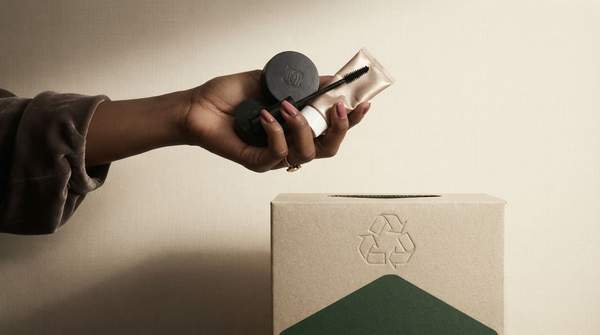
On the packaging side, the same source notes that forward-thinking companies are tackling the industry's packaging problem by experimenting with unusual materials that align with circular principles. The consumer-relevant test is whether the packaging can re-enter the recycling stream or otherwise avoid single-use disposal—recyclable design, recycled content, or formats designed to break down safely.
Supply chain transparency ties the two together. Traceable sourcing is what separates a genuinely circular ingredient from an unverifiable claim: a brand that can name the industry and the specific by-product—as in coffee grounds collected from London cafés—is offering evidence, not atmosphere.
Circular Principles in Practice: A Brand Action Guide
The table below maps the Ellen MacArthur Foundation's three principles to concrete, observable actions and to brands whose practices are documented in the sources. Brand-specific figures are as reported by the brands themselves or by the trade press covering them; this article does not independently verify them.
| Circular Principle | Brand Action | Brand Example(s) |
|---|---|---|
| Eliminate waste and pollution | Design products and processes so waste is not produced in the first place, using by-products from other industries as inputs. | UpCircle Beauty collects spent coffee grounds from London cafés and uses apricot stones, argan shells, maple bark and chai spices rescued from other industries; FRUU formulates lip and body balms largely from processed fruit waste, such as oil from overripe avocados rejected by supermarkets, aiming for 30–60% by-product ingredients per formula. |
| Circulate products and materials | Keep products and materials in use at their highest value through reuse, recycling and other circulation processes. | UpCircle designs packaging that can re-enter the recycling stream, with a goal of eliminating single-use waste from the product; FRUU aims for every product to be biodegradable and recyclable. |
| Regenerate nature | Shift from extraction to regeneration through materials that return safely to the earth. | Compostable packaging options, as discussed in circular beauty guidance, contribute to this principle by keeping materials out of landfill and allowing them to break down safely. |
Read the table as an evaluation tool, not an endorsement list. Each row pairs a principle from the Ellen MacArthur Foundation with an action you can look for and an example documented in the reporting; UpCircle's rescued-waste figures, for instance, are the brand's own accounting, including its claim of more than 450 tonnes of would-be waste rescued since 2016.
Circular Beauty in Practice: Brand Examples
The fastest way to make circularity concrete is to look inside an actual supply chain. UpCircle, which Aquafil's ECONYL magazine credits with arguably pioneering the upcycled-ingredient movement when it began collecting waste coffee grounds from London baristas in 2016, turning them into scrubs and soaps, now documents its sourcing in detail. Its spent coffee grounds come from independent cafés around London and serve as the active in an eye cream, a face scrub and a body scrub. Its apricot stones come from the apricot oil industry and appear in its Cleansing Face Balm; argan shells are rescued from argan oil production in Morocco.
FRUU offers a complementary model. Its lip and body balms are made in small batches in a UK workshop largely from by-products of processed fruit waste—avocado oil pressed from overripe avocados that supermarkets will not sell. The brand reports aiming to include between 30% and 60% by-product ingredients in each formula, and for every product to be entirely biodegradable and recyclable, which makes its degree of circularity a stated target that a shopper can ask about directly.
Neither brand is presented here as perfect, and neither example constitutes a verified standard. What they demonstrate is that circular claims can be specific enough to check: a named waste stream, a named by-product, a stated percentage, a packaging format with an end-of-life plan. That specificity is exactly what vague eco-friendly language lacks.
How to Spot Circular Beauty Products
Because circular beauty has a working definition, evaluating a product is a matter of asking targeted questions. The checklist below follows the four pillars of circular practice as documented by UpCircle, and it works for any brand, not just the examples above.
- Ingredients: Does the brand name a specific rescued or upcycled by-product—coffee grounds, fruit stones, overripe produce—and the industry it comes from, rather than gesturing at "natural" content?
- Packaging: Is the packaging explicitly recyclable or designed to re-enter the recycling stream, and does the brand address the full product rather than just the bottle?
- Single-use waste: Does the brand state a goal of reducing or eliminating single-use materials across the product, in both formula and container?
- Traceability: Can the brand show where the ingredient came from and where the packaging goes—an origin and a destination rather than a mood?
- Numbers behind claims: Does the brand report measurable figures, such as tonnes of waste rescued or a percentage of by-product ingredients, that you could ask it to substantiate?
A brand that answers most of these questions concretely is demonstrating circular practice; a brand that answers none of them is using "sustainable" as decoration. Keep in mind the limits of this exercise: this is an evaluation framework, not a certification, and checking a label does not replace independent verification of a brand's claims.
Making Informed Circular Beauty Choices
Consumers can make more informed purchasing decisions by actively looking for brands that demonstrate clear commitments to eliminating waste, circulating materials, and regenerating nature through their ingredient sourcing and packaging choices. The three-principle framework gives you a rubric: ask whether the product prevents waste by design, keeps its materials in circulation, and considers its end of life. The measurable indicator is on the shelf in front of you—look for specific claims about upcycled ingredients, recyclable packaging, and transparent supply chains on product labels and brand websites. A brand that names its waste stream, states its packaging destination, and quantifies its by-product content has given you something to act on; one that offers only atmosphere has told you that, too.
Sources
- Circular economy introduction — Ellenmacarthurfoundation
- 6 circular beauty brands to have on your radar — ECONYL® by Aquafil
- What is circular beauty? The definitive 2026 guide — UpCircle Beauty