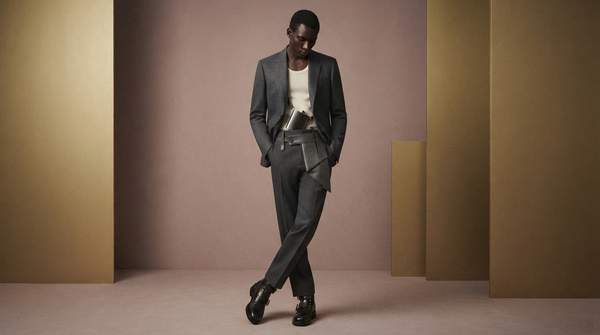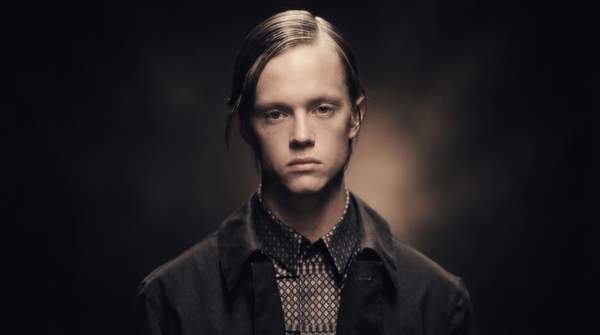
Before he won Iowa's governor's race on November 3, 2026, Rob Sand walked runways for Prada in Milan. The 44-year-old Democrat's early-2000s career as a high-fashion model, which he has confirmed himself, is a documented chapter of his biography: he was reportedly signed to IMG Models, walked for major fashion houses, and used the earnings to pay for his education at Brown University and the University of Iowa College of Law.
Introduction: The Unexpected Past of Governor-elect Rob Sand
Rob Sand's modeling past resurfaced shortly after he defeated Republican businessman Zach Lahn in Iowa's gubernatorial race. News reports identified the 6-foot-3 politician—a willowy figure, as one account described him—as a onetime runway model whose engagements included some of the most recognizable names in fashion. The story gained traction when images from his European runway years circulated after the election, and it was confirmed by Sand's own social media, which CBS News reported carried the wry caption "Audited: true."
What emerged was not rumor but a verifiable record. Photographs and contemporary fashion reporting place Sand in the Prada men's Spring 2003 Ready-to-Wear show in Milan on August 1, 2002, and editorial work from the same period survives in print. For a public figure whose career has run through law and politics, the modeling stint is a brief but well-documented detour—one that began, improbably enough, on an American college campus.
Early Career: From Brown University to Milan Runways
Sand began modeling while attending Brown University, where he earned a bachelor's degree in political science. Vogue described the work as a successful side hustle that took him to Milan, according to CBS News. The distance between those two settings—a Rhode Island campus and the Italian fashion capital—is the essence of the story: a student from Iowa, decades before his election as the state's governor, was working the same runways as professional models with international careers.
During this brief career stint in the 2000s, Sand was reportedly signed to IMG Models, a top agency whose roster has included models like Claudia Schiffer, Lauren Hutton, and Ashley Graham. Representation at that level is a meaningful marker in the fashion world: IMG is not a local or commercial shop but one of the industry's major agencies, and a college student signed there was, however briefly, operating at the profession's upper tier. The earnings from that work helped pay his way not only through Brown but also through the University of Iowa College of Law, where he earned his Juris Doctor.
Rob Sand's High-Fashion Modeling Timeline
The scattered facts from multiple reports assemble into a coherent sequence, beginning with his start as a student model and ending with a telling choice in 2004. Reading the dated engagements in order shows how quickly the side gig escalated from campus work to European runways, and how it eventually competed directly with the political life that would define his later career.
| Timeframe | Event | Key detail |
|---|---|---|
| Early 2000s | Begins modeling while attending Brown University | The work helped fund his education at Brown and the University of Iowa College of Law |
| During that period | Signed to IMG Models (reported) | A top agency whose roster has included Claudia Schiffer, Lauren Hutton and Ashley Graham |
| August 2002 | Walks in the Prada men's Spring 2003 Ready-to-Wear show in Milan | Identified as a model in the August 1, 2002 show |
| Fall 2002 | Appears in an AnOther Magazine editorial spread titled "Adolescents" | Reported by Vogue |
| Undated runway work | Walks for Giuliano Fujiwara and the Japanese label Number (N)ine | Additional engagements reported alongside his Prada show credits |
| 2004 | Misses the Iowa caucus in his hometown of Decorah | He was in Milan for modeling work, he previously told Newsweek |
The sequence is short—a few years at most, threaded around two degree programs—but it is densely documented. The Prada show in August 2002 is the most precisely dated event, anchored to a specific day, city, and collection. The AnOther Magazine spread from fall 2002 extends the record from runway into print editorial, a second distinct branch of high-fashion work. The endpoint, the 2004 choice, is its most revealing entry: Sand skipped a chance to caucus in his hometown of Decorah because he was in Milan, a decision he himself recounted to Newsweek years later.
A High-Fashion Portfolio: Brands, Agencies, and Editorials
The names attached to Sand's brief career place it firmly in high fashion rather than commercial or catalog work. On the runway, he walked for Prada—among the most prominent houses in menswear—as well as the Japanese label Number (N)ine and Giuliano Fujiwara. In print, he appeared in editorial spreads, including the fall 2002 AnOther Magazine feature titled "Adolescents," as Vogue reported.
AnOther Magazine is a fashion-title context worth naming: editorial spreads there are creative, high-fashion assignments rather than advertisements, and appearing in one alongside runway work suggests Sand's bookings were of a piece—a genuine, if brief, presence in the industry's editorial and runway circuits rather than a single isolated job. His reported representation by IMG Models rounds out the portfolio, connecting him to the same agency infrastructure that manages established international models. Taken together, the runway credits, the print editorial, and the agency signing describe a career that, however short, reached fashion's top tier.
The Context of His Choice: Funding Education and Key Priorities
The through-line of Sand's modeling years is practical rather than glamorous. The Daily Beast characterized it as a stylish side gig that helped him pay his way through college at Brown and through the University of Iowa College of Law. That financial purpose reframes the whole episode: a student earning an Ivy League degree and then a law degree used high-fashion work as a means of support, and the work was lucrative enough to be worth pursuing across the Atlantic.
That context also explains the intensity of the commitment. A young man balancing coursework on two campuses with transatlantic runway jobs faced real trade-offs, and the 2004 caucus anecdote captures one of them precisely. Sand, then a politically engaged young Iowan with a political science degree, gave up participation in his hometown caucus—the foundational ritual of Iowa civic life—because a modeling job in Milan took priority. He later told Newsweek about the missed caucus himself, which suggests he viewed it not as an embarrassment but as a memorable feature of an unusual student economy. The anecdote dates the end of the modeling era roughly: by 2004 the work was still active enough to compete with, and win against, even a basic act of political participation.
Nothing in the record indicates that the modeling career extended much beyond that point. The documented events cluster in the early 2000s, between his undergraduate years at Brown and his law studies at Iowa, and the reporting consistently frames the stint as brief.
A Documented Chapter: Rob Sand's Modeling Past
Rob Sand's past as a high-fashion model in the early 2000s is a verifiable biographical fact, supported by multiple reports and his own confirmation. The consistent reporting across reputable news outlets and Sand's own social media confirmation serve as a clear signal of the factual basis of this career chapter. For readers weighing what to believe of a viral post-election story, the record is specific and checkable: the reported IMG Models signing, the August 1, 2002 Prada men's Spring 2003 show in Milan, the fall 2002 "Adolescents" spread in AnOther Magazine, and the 2004 Milan job that kept him from caucusing in Decorah.
What the documented record does not show—and what no reporting has established—is how, or whether, that chapter shaped his later work as a lawyer and politician. The evidence supports only what it supports: a brief, high-level modeling career, pursued for financial reasons, that intersected with his education and, in at least one instance, came first even over Iowa's most characteristic civic ritual. That is the complete, evidenced account of the chapter—and for now, it is also where the trail ends. The story stands on its own as a documented episode in the life of Iowa's governor-elect, and any connection between the runway years and the political ones remains, on the current evidence, an open question rather than a finding.