A fashion editor shapes how a publication sees fashion—and how its readers see it. The job splits into two connected layers: strategic work like trend forecasting and editorial planning, and hands-on work like running photoshoots and editing copy. Understand both, and you understand the career.
According to the American Advertising Federation's career overview, a fashion editor creates and curates fashion content across magazines, newspapers, websites, and social platforms. What makes the role distinctive is that it is, in the AAF's words, "both creative and business-oriented." You are not just making beautiful pages. You are making decisions that serve a brand and an audience.
The Fashion Editor's Core Mission: Shaping Narrative and Style
What is the editor actually responsible for? Everything that carries the publication's fashion voice.
The AAF describes editors as selecting, styling, and photographing clothing and accessories for editorial spreads and campaigns, while also writing articles, conducting interviews, and attending fashion shows and events. Career coaching from Glam Observer frames the mission more bluntly: "editors are hired for their taste and their eye, not for being neutral." You bring a point of view, then translate it into content people can feel.
That is the core skill of the role—editorial storytelling, which Glam Observer defines as the ability to turn a collection or a trend into a narrative people feel. Without that narrative, a photoshoot is just clothes. With it, the shoot becomes an argument about where fashion is going.
Strategic Vision: Guiding the Editorial Direction
The first layer of the job is forward-looking. A widely used recruiter job description template puts it at the top of the responsibility list: "Develop and execute the fashion editorial strategy across print, digital, and social platforms."
What does that mean in practice? The AAF says editors identify and predict upcoming fashion trends and use that knowledge to create compelling content. The job template adds that editors must "stay updated on fashion trends, designers, and cultural movements" and develop concepts that align with brand guidelines and audience expectations.
This is where the editor's analytical side lives. You read the industry—runways, designers, cultural shifts—and decide what your publication should say about it. Your taste becomes strategy.
The Fashion Editor's Dual Role: Strategic Vision vs. Tactical Execution
To see how the two layers of the job fit together, map the documented duties side by side. The strategic column sets direction; the tactical column delivers it.
| Domain | What the editor does | Skills it draws on |
|---|---|---|
| Strategic Vision | Develop and execute the editorial strategy across print, digital, and social; identify and predict upcoming trends; stay updated on designers and cultural movements; keep content aligned with brand guidelines and audience expectations | Trend forecasting and analysis; a defined point of view; editorial storytelling; analytical thinking |
| Tactical Execution | Lead styling direction and oversee photoshoots; coordinate with photographers, stylists, writers, and art directors; review and approve articles, visuals, and layouts; write and conduct interviews; manage freelance contributors and budgets | Writing and editing; visual curation; team and project management; multitasking and organization |
The framework shows the interplay clearly: a trend spotted in the strategic column becomes a photoshoot managed in the tactical column. The same person sets the destination and drives the production there.
Tactical Execution: Bringing Vision to Life
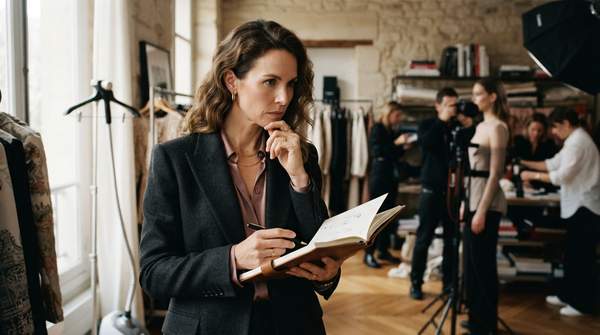
The second layer is where concepts become content. The recruiter template lists the operational duties in detail: "Lead styling direction and oversee fashion photoshoots," "Coordinate with photographers, stylists, writers, and art directors," and "Review and approve fashion-related articles, visuals, and layouts."
There is also a management dimension that surprises many outsiders. The same template has editors managing freelance contributors and editorial budgets, and building relationships with PR agencies, brands, and designers. The AAF notes that editors work closely with photographers, stylists, and other fashion professionals—and must communicate effectively with both creative and business teams.
In other words, your day mixes casting calls, layout approvals, and budget spreadsheets. Vision without execution is a mood board. This is the job that closes the gap.
Essential Skills for a Fashion Editor
So what should you actually build? The sources converge on a set of core abilities.
The recruiter template calls for strong writing, editing, and visual storytelling skills, plus multitasking, organizational, leadership, and analytical abilities, and an excellent understanding of fashion history, trends, and industry dynamics. Glam Observer distills it further: editorial storytelling and a strong, defined point of view. The AAF emphasizes written and verbal communication, and a strong understanding of the target audience and the medium.
Formally, the recruiter template asks for a bachelor's degree in fashion, journalism, communications, or a related field, along with proven experience in an editorial or content leadership role.
Skills in Action: Connecting Abilities to Responsibilities
Each skill maps to a concrete duty. Trend forecasting powers the strategy work—deciding which movements deserve coverage. Editorial storytelling turns those trends into narratives that shape how readers view fashion, as the AAF puts it. Visual curation shows up in styling direction and layout approval. Leadership and organization appear in photoshoot management and freelance coordination. Networking—relationships with PR agencies, brands, and designers—feeds both columns, giving you access and material.
A few boundaries to keep in mind. This is a general overview of the role: it does not break down publication hierarchies like Editor-in-Chief, Fashion Director, or Market Editor. And it is not a step-by-step hiring guide, although Glam Observer argues that "getting in the room matters more than having the perfect résumé."
Assessing a Career as a Fashion Editor: A Blend of Creativity and Leadership
Aspiring professionals should cultivate a diverse skill set encompassing creative vision, analytical thinking, and strong leadership to succeed as a fashion editor. No single ability carries the role—you need the taste to set direction and the discipline to deliver it.
The measurable indicator to aim for: a portfolio demonstrating both strategic editorial planning, such as trend analysis and concept development, and successful project execution, such as published editorials and team coordination. If your work shows both halves of the dual role, you are demonstrating readiness for the job as the evidence actually defines it.