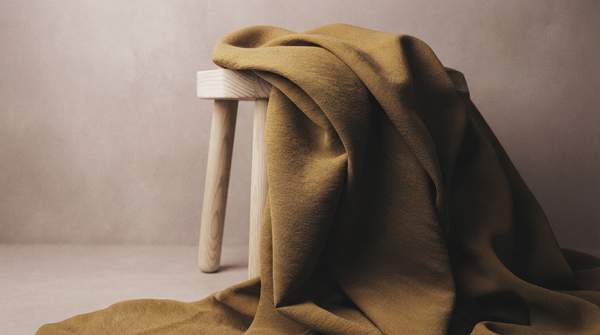
A fabric's drape is not a mystery or a lucky accident. It is the predictable outcome of three factors building on one another: the pliability of the fiber, the twist and fineness of the yarn, and the frequency of interlacements in the weave. Once you understand how each layer compounds the last, you can look at any woven cloth and make a reasonable prediction about its silhouette and movement. This explainer covers woven fabrics specifically; it does not address knits or the chemical finishes that can also alter drape.
Fiber Properties: The Foundation of Flexibility
Every fabric begins with a fiber, and that fiber sets the ceiling on what is possible. Writing in Handwoven's Ask Madelyn column, weaving expert Madelyn van der Hoogt identifies three basic factors that affect drape: the yarn and fiber, the weave structure, and the density of the warp and weft. Her fiber example is a useful one to hold in mind: wool is softer and more pliable than linen, so a wool cloth starts life with more natural give.
But fiber alone does not decide the outcome. As SELVANE's editorial team puts it, fiber is the foundation, yet the construction of the yarn and the architecture of the weave are what ultimately shape the fabric and its drape. Those later stages can either enhance or diminish the fiber's natural draping qualities.
There is also a subtlety worth knowing before you shop. Van der Hoogt notes that fiber type affects how a fabric feels beyond drape alone: linen has drape, for instance, but a completely different feel from silk, wool, or cotton. Drape and hand are related but distinct qualities, so a fabric that hangs well may still feel crisp or firm against the skin.
Yarn Construction: Shaping Stiffness and Fluidity
The second layer of the model is how those fibers are spun into yarn, and twist is the lever that matters most. Highly twisted yarns are stiffer than loosely spun yarns, according to van der Hoogt, so a high twist pulls a fabric toward structure and away from flow. A loose, low-twist spin does the opposite, letting the yarn bend and shift more freely within the cloth.
Thickness plays its own role. SELVANE's editorial explanation defines yarn count as the fineness or thickness of a yarn: a lower count indicates a thicker, heavier yarn, while a higher count signifies a finer, lighter one. Fineness and flexibility both contribute to the resulting fabric's softness, so a fine, lightly twisted yarn is the natural pairing for a fluid garment.
Notice how the hierarchy works here. A pliable fiber gives you potential, but the spinning decision either protects or squanders it. Spin that same soft wool into a tight, high-twist yarn and you stiffen it before it ever reaches the loom. The yarn stage is where drape first becomes a design choice rather than an inheritance.