Every woven fabric is built from one structural decision: how often the vertical warp yarns interlace with the horizontal weft yarns. Plain weave interlaces every yarn at every crossing, producing a stable, durable fabric that resists snags but drapes stiffly and creases readily. Twill interlaces less frequently, trading some stability for pliability and diagonal strength. Satin minimizes interlacement almost entirely, letting long "floats" of yarn glide over the surface, which yields fluid drape and luster at the cost of abrasion resistance. Understanding this single trade-off lets you predict how a garment will behave before you buy it.
Plain Weave: Simplicity and Stability
Plain weave is the simplest structure: each weft yarn passes over and under alternating warp yarns, so every crossing point is an interlacement. This dense grid of interlocked yarns creates a firm, flat, stable fabric. According to ACP Composites' woven fabric guide, plain weave fabrics are ideally suited to flat applications where drape and conformability are not required — a technical way of saying the fabric holds its shape rather than flowing.
That rigidity is the price of stability. With so many interlacement points, there is little slack for yarns to shift, so the fabric resists snagging and holds its shape well. The same tightness means plain weave tends to be crisper and more prone to creasing than looser structures. It is the default for basic shirting, linings, and quilting — high-volume basics where reliable stability matters more than fluidity, as iFactory AI's guide to weave structures notes.
Twill Weave: Diagonal Strength and Drape
Twill is recognizable by its diagonal ribs. Instead of interlacing at every crossing, a warp yarn floats over two or more weft yarns before dipping under one, producing the characteristic diagonal line. Fewer interlacements make twill more pliable than plain weave while retaining considerable strength — Fabric Sight's weave comparison rates twill's durability as high and its drape as good, calling it an excellent balance of structure and comfort.
Research supports the durability claim with measured data. A 2025 study in Scientific Reports by Onchanok Juntarasakul and colleagues tested polyester fabrics in plain, twill, and satin weaves and found twill had the highest tensile strength in the weft direction, and that twill produced the lowest microplastic fiber emission during laundering, followed by plain weave, with satin emitting the most. The diagonal structure also helps twill shed creases better than plain weave, which is why twill dominates denim, trousers, and structured outerwear.
Satin Weave: Luster and Fluidity
Satin takes the float principle to its extreme: a weft yarn floats over several warp yarns before interlacing under just one. ACP Composites describes how, in a 4-harness satin, the fill yarn passes over three warp yarns and under one, making the fabric more pliable than plain weave and able to form easily around curves. iFactory AI explains that satin concentrates interlacement points as far apart as possible, producing the smoothest, most lustrous surface at the cost of lower abrasion resistance.
Those long floats are what you feel and see: light glancing off uninterrupted yarn segments creates sheen, and the loose structure lets the fabric fall in fluid folds. The trade-off is fragility in daily wear. Fabric Sight rates satin's durability as low-to-medium and notes it requires careful handling; floats catch and snag easily. Interestingly, the Scientific Reports study found satin exhibited the highest warp-direction tensile strength of the three weaves in polyester — raw strength in one direction does not equal abrasion resistance in use.
Interlacements vs. Floats: The Core Trade-off
The unifying principle is simple: the more interlacement points a weave has, the more stable, snag-resistant, and durable it tends to be — and the stiffer and more crease-prone it becomes. The more floats (long uninterrupted stretches of yarn riding over the surface), the more pliable, lustrous, and drapeable the fabric — and the more vulnerable to snagging and abrasion.
Plain weave sits at one extreme: maximum interlacement, maximum stability, minimum drape. Satin sits at the other: minimal interlacement, maximum fluidity, minimal abrasion resistance. Twill occupies the middle ground, which is precisely why it has become the workhorse structure for durable yet comfortable garments. Once you grasp this spectrum, you can evaluate unfamiliar fabrics predictively rather than memorizing each one.
Weave Comparison: Structure, Performance, and Use
The table below correlates each weave's structure with its measured and reported performance, so you can trace how interlacement frequency produces each trade-off.
| Weave Type | Basic Structure | Drape | Durability | Wrinkle Resistance | Common Garments |
|---|---|---|---|---|---|
| Plain | Every yarn interlaces at every crossing; maximum interlacement | Crisp to moderate; holds shape | Medium; good snag resistance | Lower; prone to creasing | Shirting, linings, quilting |
| Twill | Diagonal pattern; yarns float over two or more crossings | Good; more pliable than plain weave | High; highest weft tensile strength and lowest microplastic emission in tested polyester | Better than plain weave | Trousers, jackets, denim |
| Satin | Long floats; interlacements spaced as far apart as possible | Fluid; most pliable of the three | Low–medium; low abrasion resistance, though highest warp tensile strength in tested polyester | Prone to wrinkling and snagging | Eveningwear, lingerie, linings |
Read the table as a spectrum: as floats lengthen from plain to satin, drape and luster rise while abrasion resistance falls. The tensile-strength findings from the polyester study show that raw strength and everyday durability are different things — satin can be strong in one direction yet still snag easily.
Making Informed Clothing Choices
When selecting clothing, prioritize the weave structure based on desired performance: choose plain weave for stability, twill for balanced durability and drape, and satin for luxurious drape and luster. For high-wear garments like workwear, plain or twill is the safer bet; for eveningwear where sheen and flow matter more than toughness, satin earns its delicacy.
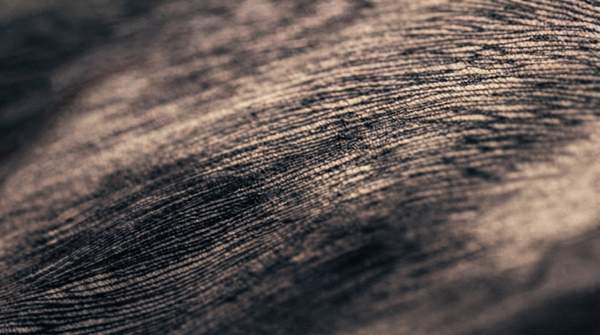
The measurable indicator that you have chosen well: the garment's label explicitly states the weave type, or its visual and tactile properties — diagonal lines for twill, a smooth lustrous surface for satin, a flat tight grid for plain weave — align with the expected characteristics of that weave. Check the fabric against your hand: if a "satin" blouse snags easily and a "twill" jacket holds diagonal ribs and sheds creases, the structure is doing exactly what textile science predicts.